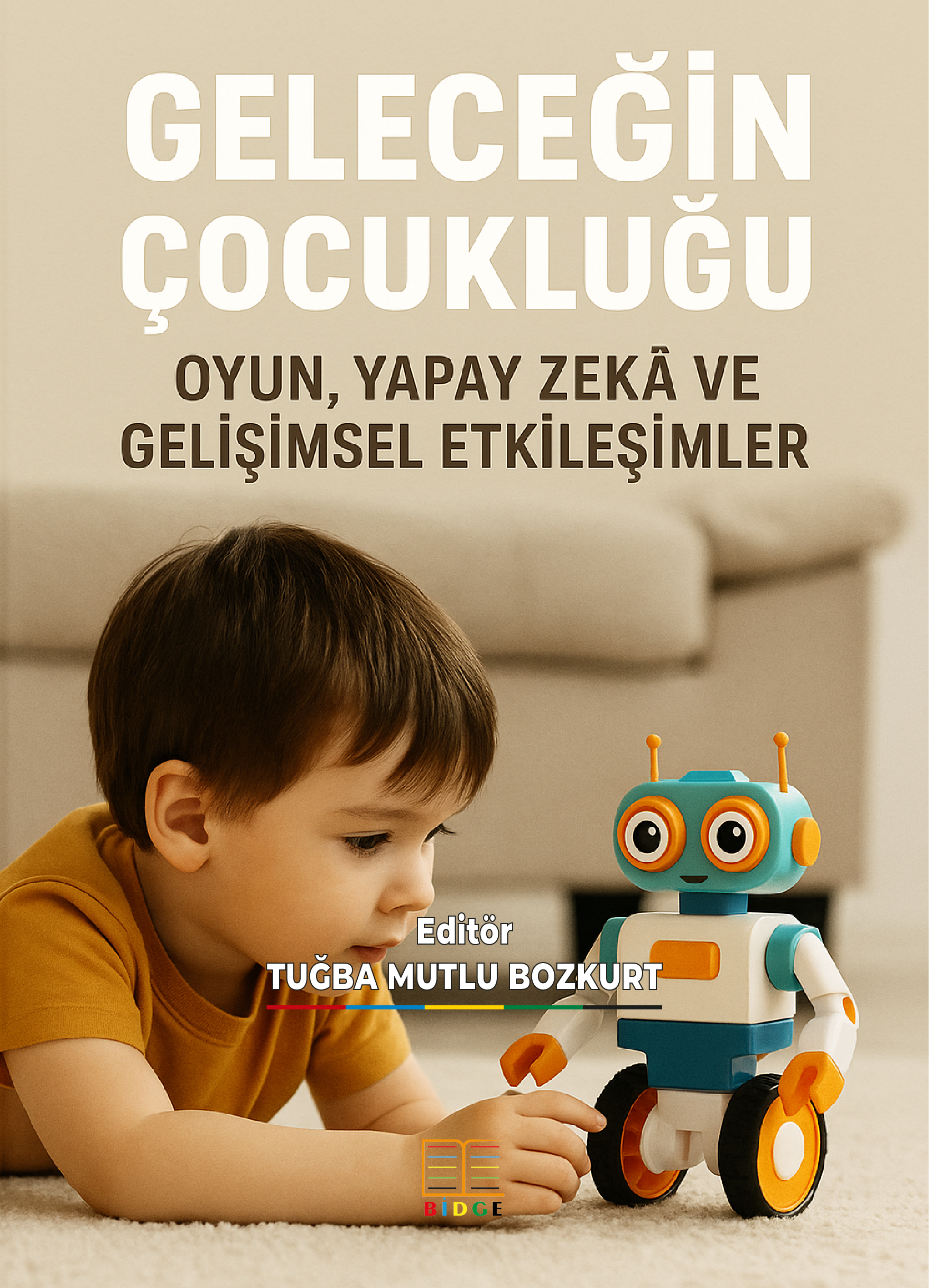
Geleceğin Çocukluğu: Oyun, Yapay Zekâ ve Gelişimsel Etkileşimler
Editör: TUĞBA MUTLU BOZKURT
ISBN: 978-625-372-788-8
Yayın Tarihi: 25.06.2025
Dil: Türkçe
Abstract
“Geleceğin Çocukluğu: Oyun, Yapay Zekâ ve Gelişimsel Etkileşimler” kitabı, çocukluğun geleceğine dair çok boyutlu bir bakış açısı sunarak oyun ve yapay zekâ teknolojilerinin çocuk gelişimi üzerindeki etkilerini çeşitli disiplinlerden akademisyenlerin katkılarıyla ele almaktadır. İlk bölümde yapay zekâ destekli psiko-eğitim uygulamalarının dijital dönüşümü, etik sorumlulukları ve kültürel uyumluluğu tartışılmıştır. Yapay zekânın çocukların psikolojik ve bilişsel gelişimini destekleyen, ancak kültürel ve etik sınırlamaları da bulunan önemli bir araç olduğu vurgulanmıştır. İkinci bölümde özel gereksinimli çocukların oyun yoluyla katılımının gelişimsel katkıları anlatılmış; oyunların sosyal, bilişsel, duygusal ve motor gelişimi desteklediği, bu çocukların sosyal uyum ve özgüven kazanmasında kritik bir araç olduğu belirtilmiştir. Üçüncü bölümde okul öncesi çocukların doktor, hemşire ve hastane algıları, benzetme yöntemiyle analiz edilerek, çocukların bu kavramları algılamalarının genel olarak olumlu olduğu, fiziki özellikler ve işlevlere göre benzetmeler yaptıkları ortaya konmuştur. Dördüncü bölümde ise çocuk yogasının duygu düzenleme becerilerine katkısı, yoga destekli eğitim programı geliştirme süreci ve örnek etkinliklerle detaylandırılmıştır. Programın, çocukların duygusal farkındalık, beden-zihin bütünlüğü, dikkat ve sosyal becerilerini geliştirmeye yönelik olduğu, ayrıca aile katılımıyla desteklendiği ifade edilmiştir. Kitap, çocukların gelişim süreçlerinde teknolojik ve geleneksel yöntemlerin harmanlanarak kullanılmasının önemini ve etik-sosyal sorumluluk taşıyan kapsayıcı yaklaşımların gerekliliğini ortaya koymaktadır.
The book “Childhood of the Future: Play, Artificial Intelligence, and Developmental Interactions” offers a multidimensional perspective on the future of childhood by examining the effects of play and artificial intelligence technologies on child development with contributions from scholars across various disciplines. The first chapter discusses AI-supported psychoeducation applications, highlighting the digital transformation, ethical considerations, and cultural compatibility of these technologies. It emphasizes AI as a crucial tool supporting children's psychological and cognitive development, while acknowledging its cultural and ethical limitations. The second chapter explores how play facilitates the developmental participation of children with special needs, underscoring play’s critical role in social, cognitive, emotional, and motor development, as well as fostering social adaptation and self-confidence. The third chapter analyzes preschool children’s perceptions of doctors, nurses, and hospitals using metaphorical comparison, revealing generally positive attitudes shaped by physical traits and functional associations. The fourth chapter focuses on the role of children’s yoga in fostering emotional regulation skills, detailing the development of a yoga-supported emotion regulation education program and providing sample activities. The program targets children’s emotional awareness, body-mind integration, attention, and social skills, supported by parental involvement. Overall, the book underscores the importance of integrating technological and traditional methods in children's developmental processes, advocating for inclusive approaches grounded in ethical and social responsibility.
Anahtar Kelimeler
yapay zekâ destekli psiko-eğitim özel gereksinimli çocuklar oyun temelli öğrenme çocuk algıları yoga ile duygu düzenleme
İçerik
Tablo verileri için sağa-sola kaydırınız.
